
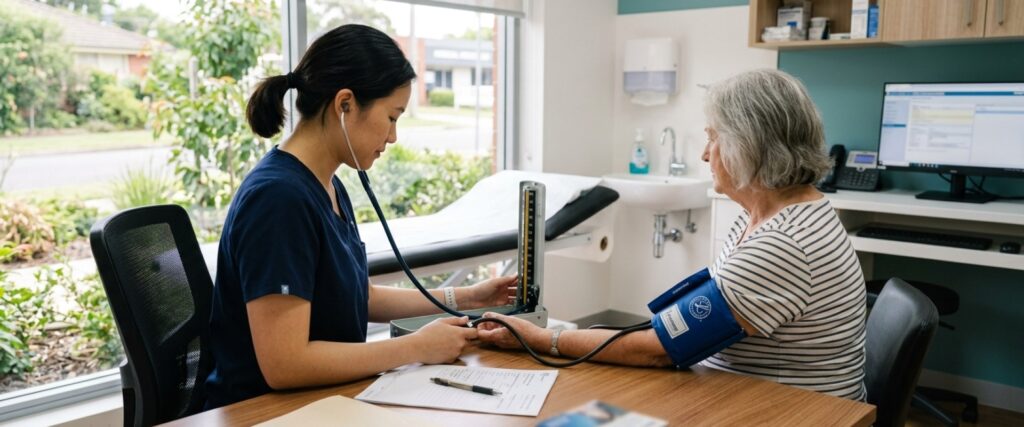
If you need a driving medical Liverpool, NSW general practice consultations provide a routine assessment to confirm that commercial and private drivers are medically fit to operate a vehicle. This check evaluates key health factors, including vision, cardiovascular health and musculoskeletal function, ensuring you can remain safe behind the wheel. This guide explains how to prepare for your assessment, what paperwork to bring and what to expect during your appointment.
If you’ve been asked for a driving medical in Liverpool — whether you’re renewing a truck, bus or taxi licence, or Transport for NSW has flagged your age or a health condition — the assessment is a straightforward GP consultation that checks your vision, general health and any medical conditions that could affect safe driving. Booking ahead, bringing the right paperwork, and knowing what the GP will ask make the appointment quick and stress-free. This guide walks you through exactly what to prepare and what happens on the day. Healthdirect Australia’s guidance on general medical service in Liverpool, NSW 2170 sets this out in more detail.
Key Takeaways
- A driving medical is a GP assessment confirming you’re medically fit to hold your current or upcoming driver’s licence class.
- Commercial drivers (truck, bus, taxi, rideshare) and drivers with certain age or health circumstances are the most common patients needing one.
- Bring photo ID, your current licence details, a list of medications, and any specialist letters relevant to conditions like diabetes, heart disease or vision problems.
- The GP checks vision, hearing, cardiovascular health, musculoskeletal function and any condition that could impair safe driving.
- You can book a driving medical appointment in Liverpool at Trinity Healthcare Centre by phone or online, and results are usually provided to you at the end of the consultation.
Who Needs a Driving Medical in Liverpool?
A driving medical is generally required in one of three situations: you hold or are applying for a commercial driver’s licence (truck, bus, taxi or rideshare), Transport for NSW has requested a medical review because of your age or a reported health condition, or your employer requires proof of medical fitness as part of a work medical. Some drivers also choose to book a driving medical proactively after a diagnosis such as diabetes, epilepsy or a cardiac event, so they know where they stand before their licence is due for renewal.
At Trinity Healthcare Centre, our GPs conduct driving medicals as part of our broader range of medical practice services in Liverpool, alongside related assessments like workers compensation medicals and pre-employment checks for drivers who need both.
Prefer to See a Female GP for Your Driving Medical?
Some patients feel more comfortable discussing their health history — including any conditions relevant to fitness to drive — with a female doctor. This is a normal preference, and one our practice can easily accommodate. Our team includes several female GPs, and you’re welcome to request one when you book your driving medical online or by phone. You can see the female GPs and the rest of our clinical team on our team page.
What to Bring to Your Driving Medical Appointment in Liverpool
Turning up prepared is the single biggest thing you can do to keep your driving medical appointment in Liverpool short and simple. Before your visit, gather:
- Photo identification and your current driver’s licence details, including licence class and number.
- A current list of all medications and dosages, including anything prescribed by another doctor or specialist.
- Any relevant specialist letters or reports, if you’re being managed for a condition that could affect driving.
- Your glasses or contact lenses, if you wear them, since the GP will need to test your vision as you normally drive.
- The specific medical assessment form required for your licence type, if Transport for NSW or your employer has issued one, as some forms need to be filled out on official paperwork rather than a general letter.
If you’re not sure which form applies to you, it’s worth calling the practice on (02) 9822 7107 before your appointment so reception can confirm what’s needed and, if relevant, whether a longer consultation should be booked.
What the GP Checks During a Driving Medical
Getting a driving medical done properly protects not just your licence, but your safety and the safety of everyone else on the road.
A driving medical follows the national medical standards for driver licensing set out by Austroads and applied by Transport for NSW, which look at whether a health condition could affect a driver’s ability to control a vehicle safely. The criteria your GP applies during a driving medical are drawn from the national Assessing Fitness to Drive standards, which set out the vision, cardiovascular, neurological and other checks required for private and commercial licences across Australia. During the consultation, your GP will typically review:
- Vision — visual acuity and field of vision, checked with your glasses or contact lenses if you normally wear them.
- Hearing — particularly relevant for commercial licence holders.
- Cardiovascular health — blood pressure and any history of heart conditions.
- Musculoskeletal function — joint mobility, strength and any physical limitation that could affect vehicle control.
- Neurological function — including any history of seizures, stroke or cognitive changes.
- Medications — reviewing whether anything you’re taking could cause drowsiness or otherwise affect driving safety.
- Diabetes management, where relevant, since blood glucose control is a specific factor in the Austroads standards for commercial and private licences alike.
A driving medical isn’t about failing a test — it’s about giving Transport for NSW an accurate, current picture of your health so your licence reflects your actual fitness to drive.
Most private licence driving medicals are completed in a single standard consultation. Commercial licence assessments, or reviews involving a specific diagnosed condition, sometimes take longer because there’s more to work through on the official form — our reception team can advise when you book whether a longer appointment is the better option.
Need a GP who already knows the local commercial driving community? Our doctors in Liverpool NSW handle driving medicals regularly for local truck, bus, taxi and rideshare drivers, so the process is familiar and efficient.
What Happens After Your Driving Medical
Once the assessment is complete, your GP will discuss the outcome with you directly. In most cases, you’ll be given a completed medical report or certificate to submit to Transport for NSW, either yourself or, in some cases, directly through the practice depending on the form used. Ask the team when you book so you know which applies to your appointment before you arrive. If the GP identifies a condition that needs monitoring or further specialist input, they’ll explain what that means for your licence and arrange the appropriate follow-up or referral rather than leaving you guessing.
If you’re ready to book, you can arrange your driving medical appointment in Liverpool through online booking, or call the practice directly on (02) 9822 7107 and reception will help you choose the right appointment length for your licence type.
Frequently Asked Questions
How long does a driving medical take?
Most private licence driving medicals fit within a standard GP consultation. Commercial licence assessments or reviews involving a specific health condition can take longer, so it’s worth mentioning your licence type when you book so reception can allocate enough time.
Do I need to book a driving medical, or can I walk in?
Trinity Healthcare Centre accommodates walk-ins alongside booked appointments where possible, but booking ahead — especially for a commercial licence medical — means the GP has time to work through the full assessment form without you having to wait.
What if I wear glasses or contact lenses?
Bring them to the appointment. The GP tests your vision as you would normally drive, so your assessment needs to reflect your corrected vision, not your unaided eyesight.
Will a health condition automatically stop me from getting my licence?
Not necessarily. Many conditions, including diabetes, heart disease and epilepsy, can still be compatible with a valid licence, particularly if they’re well managed. The GP’s role is to assess your current fitness against the Austroads standards, not to assume the worst from a diagnosis.
Is a driving medical covered by Medicare?
Generally no. Driving medicals are a licensing requirement rather than a Medicare-rebatable service, so the practice’s standard non-Medicare consultation fees apply. Ask reception for current pricing when you book.
Can I get a driving medical for a commercial licence, like a truck or taxi licence, in Liverpool?
Yes. Our GPs regularly complete commercial licence driving medicals for local truck, bus, taxi and rideshare drivers as part of our standard range of services.
Getting Your Driving Medical Sorted in Liverpool
A driving medical is one of those appointments that feels bigger than it actually is until you’ve been through it once. With the right paperwork, your medication list and a clear idea of your licence type, most patients find the assessment straightforward and are back on the road with a clear plan the same day.
If you drive for work, or Transport for NSW has asked you to have your fitness to drive reviewed, getting it sorted sooner rather than later means one less thing sitting on your to-do list. Our GPs handle driving medical assessments in Liverpool as a routine part of the practice’s day-to-day work, alongside the full range of general practice and allied health services patients rely on locally.
To book your driving medical, call Trinity Healthcare Centre on (02) 9822 7107 or use online booking to choose a time that suits.
General information only — this article does not replace individual medical advice. Please discuss your specific health circumstances with your GP during your driving medical assessment. Reviewed by Trinity Healthcare Centre, August 2026.