
As the weather warms up in South-West Sydney, ultraviolet (UV) radiation climbs and more of us head outdoors. Spring is a sensible time to think about your skin, both by booking a skin check and by learning how to check yourself at home. If you have noticed a spot you are not sure about, or you simply have not had your skin looked at in a while, this is the time of year to act.
Here is what actually happens at a GP skin check in Liverpool, how to examine your own skin each month, who is at higher risk, and how to stay SunSmart as summer approaches.
Why spring is the time for a skin check in Sydney
In Australia, sun protection is recommended whenever the UV Index reaches 3 or above. From spring onwards in Sydney, the UV Index regularly reaches those levels for much of the day, and the Bureau of Meteorology issues daily sun protection times to match. The Cancer Council notes that overexposure to UV radiation is linked to most melanomas in Australia, which is why early detection and sun protection both matter.
What happens at a GP skin check
A skin check is a straightforward appointment. Your GP will usually:
- ask about your history: past sunburn, time spent outdoors, family history of skin cancer, and any spots you are worried about
- examine your skin from head to toe in good light, including areas that are easy to miss such as the scalp, ears, back and the soles of the feet
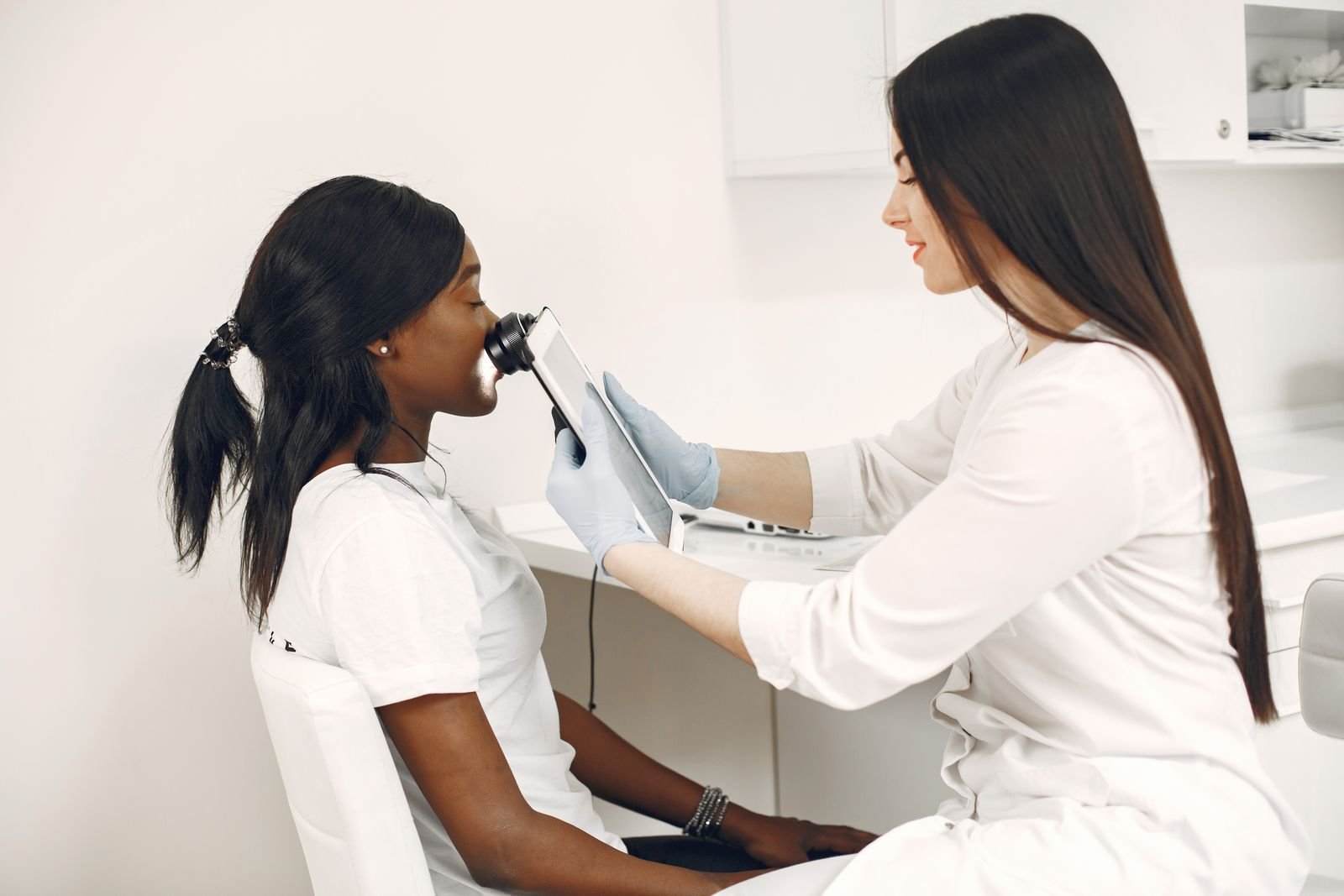
- look more closely at individual spots with a dermatoscope, a hand-held magnifier with a light that shows detail the naked eye cannot see
- take photographs to monitor a spot over time where that is useful
- arrange a biopsy or a minor procedure to remove a spot if something needs further assessment
It helps to come without make-up and nail polish and to mention any spot that is new, changing, itching or bleeding. Learn more about our skin checks.
How to check your own skin each month
A monthly self-check between GP visits helps you notice changes early. Undress fully, use a well-lit room and a mirror, and ask someone to help with your back and scalp. Check everywhere, including between your fingers and toes and under your nails.
The ABCDE guide
The Cancer Council ABCDE guide is an easy way to remember what to look for:
- A – Asymmetry: the two halves of a spot do not match
- B – Border: the edges are irregular or spreading
- C – Colour: the spot is blotchy or has several colours
- D – Diameter: the spot is getting bigger
- E – Evolving: the spot is changing or growing over weeks or months
The ugly duckling sign
Your moles tend to look like one another. The ugly duckling sign describes a spot that stands out as different from the rest in colour, size or shape. Melanoma Institute Australia points out that a melanoma may look, feel and change differently from the moles around it, so a spot that does not fit the pattern is worth showing to your GP.
Who is at higher risk
Anyone can develop skin cancer, but some people should be especially vigilant. Recognised risk factors include:
- fair skin that burns rather than tans
- a history of sunburn, especially blistering sunburn
- many moles, or unusual-looking moles
- a family or personal history of skin cancer
- outdoor work or outdoor hobbies
- increasing age
If any of these apply to you, talk to your GP about how often you should have a skin check.
SunSmart basics for summer
When the UV Index is 3 or above, the Cancer Council and SunSmart recommend five simple steps:
- Slip on sun-protective clothing
- Slop on broad-spectrum, water-resistant SPF 50 or 50+ sunscreen
- Slap on a broad-brimmed hat
- Seek shade
- Slide on sunglasses
UV radiation can pass through light cloud, so protection matters even on overcast spring days.
What this looks like at Trinity Healthcare Centre
Trinity Healthcare Centre is an AGPAL-accredited general practice at 157-161 George St, Liverpool. Principal GP Dr Bilagia Tadros and the GP team offer skin checks and can carry out minor procedures on site when needed.
- Standard GP consultations, including a skin-check consultation, are bulk billed for patients with a valid Medicare card.
- Minor procedures such as biopsies, skin excisions and suturing attract a private fee, which reception explains clearly before anything is booked.
- We are open Monday to Friday 8am to 6pm and Saturday 8am to 1pm.
Read more about our minor procedures.
See your GP sooner if…
Book a check without waiting for your usual review if you notice:
- a new spot or mole, particularly after the age of 25
- a spot that is changing in size, shape or colour
- a spot that itches, bleeds, weeps or will not heal
- a spot that looks different from all your others
For general health advice at any hour, you can call healthdirect on 1800 022 222.
Frequently asked questions
How often should I have a skin check?
It depends on your risk. Your GP can advise how often you need a check based on your skin type, history and any spots being monitored. A monthly self-check at home is useful in between.
Does a skin check hurt?
No. The examination itself is painless. If your GP needs to take a biopsy or remove a spot, local anaesthetic is used and this is explained to you first.
Is the skin check bulk billed?
At Trinity Healthcare Centre, a standard skin-check consultation is bulk billed for patients with a valid Medicare card. Minor procedures such as biopsies and excisions attract a private fee, which reception explains beforehand.
What should I do to prepare?
Come with clean skin, free of make-up and nail polish, and make a note of any spots you want checked. Wearing loose clothing that is easy to remove also helps.
Book a skin check in Liverpool
Before summer sets in, a skin check is a simple thing to tick off. Book online through HealthEngine on our online booking page or call (02) 9822 7107.